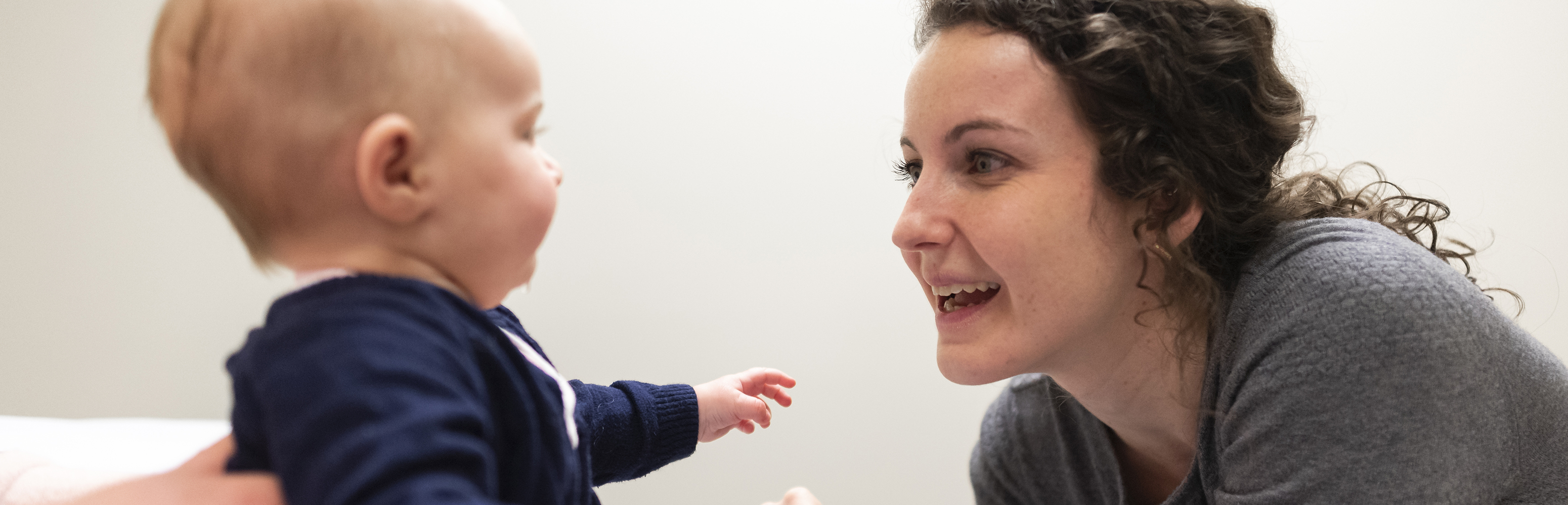
Learn by doing
Clinical lab work, simulation learning and clinical practice education will be incorporated into each year of the program. In addition to clinical practice education in acute care hospitals, you will also gain nursing experience in community settings such as schools, outpatient clinics, long term care facilities, community health and public health organizations.
The SCBScN program provides you with 1452 hours of scheduled clinical experience.
Future-ready
You will become a critical thinker, information seeker and lifelong learner. The Saskatchewan Collaborative Bachelor of Science in Nursing (SCBScN) curriculum is based on a contemporary assessment of population trends and health needs. The needs of Aboriginal people, elderly citizens and rural residents are emphasized. Informatics is a focus in the curriculum because electronic technology is increasingly used in health care to store, disseminate and access health information.
Build interprofessional skills
You will learn the knowledge and skills to become a valuable member of interprofessional teams, along side health care practitioners, such as physicians, dieticians, social workers and other nurses.
Program approval
The Senate of the University of Regina approved the BScN degree on June 9, 2010. As required by Saskatchewan legislation, every new or revised nursing education program must be approved by the Saskatchewan Registered Nurses' Association (SRNA), the professional regulatory body for nursing. The SRNA granted preliminary approval of the SCBScN program in February 2011.
Courses
There are 123 credit hours in the SCBScN program, including 24 nursing courses with eight prescribed and three elective courses taught by other faculties at the University of Regina. A variety of teaching modalities will be used.
Year 1
BIOL 110 (3 cr)
Human Anatomy & Physiology I
An introduction to the anatomy and normal functioning of the human body. The course takes a holistic approach to understanding and integrating anatomy and physiology in both lecture and laboratory components.
**Restricted to Nursing students**
*Laboratory will be taught at SIAST (Wascana & Kelsey campuses)
BIOL 111 (3 cr)
Human Anatomy & Physiology II
A continuation of BIOL 110. Further study of the anatomy and normal functioning of the human body, integrating anatomy and physiology in both lecture and laboratory components.
***Prerequisite: BIOL 110***
**Restricted to Nursing students**
*Laboratory will be taught at SIAST (Wascana & Kelsey campuses)*
CNUR 100 (3 cr)
Practice Education: Community Partnerships
This course introduces the profession of nursing and focuses on communication and collaboration in service learning environments. Learners will explore the effects of social and environmental conditions of health. There will be a focus on social justice in relation to the health of populations.
CNUR 101 (3 cr)
Practice Education: Stable Populations
This course will focus on holistic care in long term care settings. Learners will have the opportunity to develop beginning skills to participate in, support, and advocate for resident-directed care.
***Prerequisites: BIOL 110, CNUR 100, CNUR 102***
CNUR 102 (3 cr)
Foundations of Care I: A Developing Professional
This course introduces concepts safety, health, primary health care, population health and health care systems as a basis of understanding the profession of nursing. Learners will focus on understanding self, foundations for therapeutic relationships and communication in the context of caring environments and according to professional standards.
CNUR 103 (3 cr)
Foundations of Care II: Professional Nursing
This course will continue the development of the foundations for professional nursing practice. Learners will have the opportunity to acquire the knowledge, skills, attitudes and judgment necessary to practice in an interprofessional direct care environment.
***Prerequisite: CNUR 102***
CNUR 106 (3 cr)
Health & Education Across the Lifespan
This course will focus on concepts of growth and development that pertain to holistic nursing care of individuals throughout the lifespan, with emphasis on the teaching and learning principles applicable to each developmental stage, particularly the older adult. Learners will have the opportunity to critically examine the learning needs for health promotion of individuals at varying life stages.
CS 104 (3 cr)
Introduction to Informatics for Health Professionals
This course focuses on the acquisition of informatics literacy and applications of information technology in the management of health information. Topics will include: basic concepts of hardware (computers, networks, telecommunications) and software (spreadsheets, databases, web browsers), fundamentals of clinical electronic data systems and electronic medical records, issues related to security, confidentiality, and privacy of health information, library instruction on best practices in research information retrieval, evaluation and utilization of information in evidence-based professional practice, problem-solving techniques.
ENG 100 (3 cr)
Critical Reading and Writing I
This course develops student’s proficiency in critical reading and writing through the study of a wide range of non-literary and literary texts, and the study of composition, with emphasis on connections between modes of reading and writing.
INHS 100 (3 cr)
Introduction to Indigenous Health Studies 1
Introduction to health science emphasizing Indian perspectives.
Topics: history of health and health care, theories of health, personal health, consumerism, interpreting health information and statistics, health careers
Year 2
BIOL 222 (3 cr)
Microbiology for Health Professionals
This course introduces fundamental concepts of microbiology with specific emphasis on clinically relevant microbes and their impact on human health.
**Restricted to Nursing students**
CNUR 201 (3 cr)
Counselling and Therapeutic Use of Groups
This course will focus on the counselling role of nurses within the therapeutic relationship, individually and in groups. Learners will have the opportunity to develop competencies in promoting self-determination of individuals and groups toward optimum health and well-being.
***Prerequisites: CNUR 102, CNUR 103, CNUR 104***
CNUR 202 (3 cr)
Pharmacology
This course will focus on the basic concepts related to pharmacology and responsibilities of health care professionals in safe administration of medications. The learners will have the opportunity to develop critical decision making competencies related to pharmacotherapeutics.
***Prerequisites: BIOL 110, BIOL 111***
CNUR 203 (3 cr)
Alterations in Health and Advanced Assessment I
This course will focus on alterations in health of adults, and the associated nursing care, using selected scenarios. Learners will integrate nursing knowledge and critical thinking and principles of holistic assessment, pathophysiology, pharmacology, microbiology, nutrition and health education.
***Prerequisites: CNUR 101, CNUR 103, BIOL 110, BIOL 111***
CNUR 204 (3 cr)
Alterations in Health and Advanced Assessment II
This course will continue the focus on alterations in health of adults, and the associated nursing care, using selected scenarios and research. Learners will integrate nursing knowledge, critical inquiry and principles of holistic assessment, pathophysiology, pharmacology, microbiology, nutrition, and health education.
***Prerequisite: CNUR 201, CNUR 202, CNUR 203, CNUR 205, BIOL 222***
CNUR 205 (3 cr)
Practice Education: Acute Care Partnerships I
This course will focus on holistic care of adults in a variety of acute care settings. Learners will have the opportunity to apply nursing knowledge, informatics, and critical inquiry to inform clinical decision-making.
***Prerequisite: CNUR 101, CNUR 103, CS 104, BIOL 111***
CNUR 206 (3 cr)
Practice Education: Acute Care Partnerships II (3 cr)
This course will continue the focus on holistic care of adults in a variety of acute care settings. Learners will have the opportunity to apply nursing knowledge, informatics, research, and critical inquiry to inform clinical decision-making.
***Prerequisite: CNUR 201, CNUR 202, CNUR 203, CNUR 205, BIOL 222***
PSYCH 203 (3 cr)
Research Methods for Behavioural and Health Sciences
Quantitative and qualitative research methods for behavioural and health sciences, which may include: research ethics, basic statistics, clinical trials, surveys, case studies, interviews, focus groups, program evaluation, and community-based approaches. Reserved for nursing students. Others require permission of Department Head. Delivered in lecture and televised formats.
STAT 100 (3 cr)
Elementary Statistics for Applications
An introduction to statistical methods; descriptive statistics; the normal distribution; basic techniques of statistical inference; confidence intervals and hypothesis tests for population means and proportions; simple linear regression.
Open Elective (3 cr)
There are three open electives required in the program. Any course for which the University of Regina gives credit is acceptable as an open elective. The following courses are suggested open electives for the program:
University of Regina:
- SW 403 Dynamics of Death and Terminal Illness
- PHIL 273 Biomedical Ethics
- EIPC 390AA, KHS 381AB, SW 480AD, HJ 380SAK Interprofessional Collaboration for Health, Justice and Learning
- CFST 204 Understanding Diversity
- ENST 200 Introduction to Environmental Studies
- HS 300 Health in Canada
- KHS 170 Lifestyle and Health
SIAST
- Spirituality and Health (under development)
- Integrative Health Care (under development)
Year 3
CNUR 300 (3 cr)
Family Health
This course will focus on nursing care of families within the context of culture, community and society. Learners will have opportunities to explore family diversity, holistic assessment of diverse families, and integrate health promotion and beginning interventions in caring for families in practice settings.
***Prerequisite: CNUR 204, CNUR 206, STAT 100, PSYC 203***
CNUR 301 (3 cr)
Leadership and Influencing Change
This course will focus on the study and application of leadership theory pertaining to accomplishing goals and attaining greater levels of achievement in all domains of nursing practice. Learners will have the opportunity to explore principles of effective nursing leadership and management in formal and informal nursing roles.
***Prerequisite: CNUR 204, CNUR 206, PSYC 203, STAT, 100***
CNUR 302 (6 cr)
Theory & Practice Education: Child and Adolescent Partnerships
This course will focus on alterations in health of children and adolescents within the context of family. Learners will have the opportunity to explore and apply theory of developmental stages, primary health care principles and advanced assessment skills, and provide holistic care to children in the varying levels of intervention (health promotion, restoration, rehabilitation and support) while integrating nursing knowledge and critical thinking, pathophysiology, pharmacology, microbiology, nutrition and health education. ***Prerequisites: CNUR 204, CNUR 206, PSYC 203, STAT 100***
CNUR 303 (6 cr)
Theory & Practice Education: Family and Newborn Partnerships
This course will focus on the health of child-bearing mothers, and infants within the context of diverse family contexts. Learners will have the opportunity to explore and apply primary health care principles and advanced assessment skills, and provide holistic care to infants, mothers and family members in the phases of pregnancy, birthing, postnatal and postpartum experiences. There will be opportunities to collaborate within multidisciplinary and interprofessional teams in a variety of settings using varying levels of intervention (health promotion, restoration, rehabilitation and support) while integrating nursing knowledge and critical thinking, pathophysiology, pharmacology, microbiology, nutrition and health education.
***Prerequisites: CNUR 204, CNUR 206, PSYC 203, STAT 100***
CNUR 304 (6 cr)
Theory & Practice Education: Mental Health Partnerships
This course will focus on complex alterations in mental health of adults. Learners will have the opportunity to explore and apply primary health care principles and advanced assessment skills, and provide holistic care to adults in the varying level of intervention (health promotion, restoration, rehabilitation and support) while integrating nursing knowledge and critical thinking, pathophysiology, pharmacology, microbiology, nutrition and health education.
***Prerequisites: CNUR 204, CNUR 206, PSYC 203, STAT 100***
CNUR 305 (6 cr)
Theory & Practice Education: Advanced Acute Care Partnerships
This course will focus on complex alterations in health of adults. Learners will have the opportunity to explore and apply primary health care principles and advanced assessment skills, and provide holistic care to adults in the varying levels on intervention (health promotion, restoration, rehabilitation and support) while integrating nursing knowledge and critical thinking, pathophysiology, pharmacology, microbiology, nutrition and health education.
***Prerequisites: CNUR 204, CNUR 206, PSYC 203, STAT 100***
Year 4
CNUR 400 (3 cr)
Social, Political & Economic Perspectives in Nursing
This course will focus on the roles and competencies of the nurse within the context of the health care system and the larger society as they relate to community, provincial, national and global health. Learners will have the opportunity to further explore the social determinants of health and the legal, ethical and political issues and policies that impact population health.
***Prerequisites: CNUR 300, CNUR 301***
CNUR 401 (6 cr)
Theory & Practice Education: Population Health & Community Partnerships
This course will focus on community and population health. Learners will have the opportunity to explore nursing roles and integrate primary health care and nursing theory and practice related to community health and development in a variety of community settings.
***Prerequisites: CNUR 302, CNUR 303, CNUR 304, CNUR 305***
CNUR 402 (3 cr)
Health Promotion with Senior Adults and Rural & Remote Populations
This course will continue to focus on alterations in health of senior adults, and examine health promotion and nursing roles in rural and remote communities. Learners will have the opportunity to develop a deeper understanding of gerontology, and the key issues related to applying the principles of primary health care and interprofessional practice in rural and remote populations.
***Prerequisites: CNUR 301***
CNUR 403 (6 cr)
Transition to Practice I
This course will provide opportunities for the learners to integrate theory and practice in an acute care setting with an emphasis on evidence-informed practice and leadership, in preparation for assuming the role of a registered nurse
CNUR 404 (6 cr)
Transition to Practice II
This course will provide opportunities for the learners to integrate theory and practice in an acute care or community setting with an emphasis on evidence-informed practice and leadership, in preparation for assuming the role of a registered nurse.
CNUR 405 (3 cr)
Interprofessional Partnership Project
Integrated with their learning activities in Transition to Practice I and/or II, learners will complete a population health service project with at least one other profession or discipline; knowledge gained will be disseminated with colleagues and faculty in the course.
Two Open Electives (3 cr)
There are three open electives required in the program. Any course for which the University of Regina gives credit is acceptable as an open elective. The following courses are suggested open electives for the program:
University of Regina:
- SW 403 Dynamics of Death and Terminal Illness
- PHIL 273 Biomedical Ethics
- EIPC 390AA, KHS 381AB, SW 480AD, HJ 380SAK Interprofessional Collaboration for Health, Justice and Learning
- CFST 204 Understanding Diversity
- ENST 200 Introduction to Environmental Studies
- HS 300 Health in Canada
- KHS 170 Lifestyle and Health
SIAST
- Spirituality and Health (under development)
- Integrative Health Care (under development)